


 Pencil shavings in glass jar
鉛筆屑玻璃瓶
Pencil shavings in glass jar
鉛筆屑玻璃瓶 Pencil shavings in glass jar
鉛筆屑玻璃瓶
Pencil shavings in glass jar
鉛筆屑玻璃瓶

 Process photograph
過程影像
Process photograph
過程影像
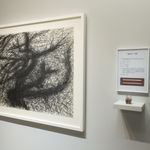
 Installation view, “Two Trees and A Mountain,” TKG+, Taipei, Taiwan, 2017
展場實錄:「兩樹一山 — 石晉華個展」
Installation view, “Two Trees and A Mountain,” TKG+, Taipei, Taiwan, 2017
展場實錄:「兩樹一山 — 石晉華個展」
 Installation view, “Two Trees and A Mountain,” TKG+, Taipei, Taiwan, 2017
展場實錄:「兩樹一山 — 石晉華個展」
Installation view, “Two Trees and A Mountain,” TKG+, Taipei, Taiwan, 2017
展場實錄:「兩樹一山 — 石晉華個展」Shi Jin-Hua
Glass jar with pencil shavings: 3 × 2 1/8 × 2 1/8 in. (7.6 × 5.3 × 5.3 cm)
Document: 16 9/16 × 11 11/16 in. (42 × 29.7 cm)
Further images
-
(View a larger image of thumbnail 1
)

-
(View a larger image of thumbnail 2
)

-
(View a larger image of thumbnail 3
)

-
(View a larger image of thumbnail 4
)

-
(View a larger image of thumbnail 5
)

-
(View a larger image of thumbnail 6
)

-
(View a larger image of thumbnail 7
)

-
(View a larger image of thumbnail 8
)

-
(View a larger image of thumbnail 9
)

-
(View a larger image of thumbnail 10
)

-
(View a larger image of thumbnail 11
)
-
(View a larger image of thumbnail 12
)

Shi Jin-Hua’s practice of The Sacrifice Tree was inspired by Andrei Tarkovsky’s film The Sacrifice, which he first watched in 1987. The film tells of a monk who commanded his apprentice to water a barren tree every day; after three years, the withered tree miraculously sprouted. The film’s central tenet—that performing the same act at the same time every day, like a ritual, can change the world—became the core premise of Shi’s life and work. In 1993, while in residence in California, Shi experienced a profound resonance with this parable during an exhausting mountain climb. From that moment on, he began to embody the role of the "young novice watering the tree."
For Shi, this endeavor is more than artistic creation; it is a sacred quest for the meaning of existence. By placing himself within the parable, he uses repetitive, seemingly futile rituals to generate the strength to live and cast off nihility in hopeless circumstances. He came to realize that the greatest threat is not death itself, but the failure to perceive the true nature of reality. He once asked himself: "If a withered tree cannot live again, why struggle?" Ultimately, he found the answer within this impossible challenge: the only meaning of life is to awaken from the dream of Saṃsāra through unceasing effort and realization.
As he wrote: "In the dream, there was indeed a mountain, and I indeed existed. But had I not exerted myself in this impossible task—climbing that mountain—I could never have awakened from the dream."
(Text adapted from the 2013 monograph. [Read full statement here])
石晉華對《犧牲樹》的實踐,源於 1987 年觀看安德烈.塔可夫斯基電影《犧牲》的啟示:一名修士要求徒弟每天為一棵枯樹澆水,三年後,枯樹竟然發芽。電影中的那句話——「如果每天在同一時刻做同一件事,像儀式一般,世界就會改變」——成為他日後創作與生活的核心命題。1993 年他在美國加州駐村登山時,於筋疲力竭之際與這則寓言再度交會,從此開始將自己化身為那位「上山澆樹的小修生」。
對石晉華而言,這不僅是藝術創作,更是一場關於生命意義的聖境追尋。他將自己置於寓言之中,透過重複的、看似徒勞的儀式,在無望的情境中擺脫虛無。他深刻領悟到,生命中最大的挑戰並非死亡,而是對實相的無明。他曾自我追問:「若枯木不可能再生,為何還要奮鬥?」最終,他在這場不可能的挑戰中找到了答案:生命唯一的意義,便是透過無止盡的努力與覺察,從輪迴的夢境中醒來。
正如他所寫:「在夢裏,確實有一座山,我也確實存在。但如果我沒有盡力做這件不可能的事,爬上那座山。我就不可能由夢中醒來。」
(本文編整自 2013 年石晉華作品集。閱讀全文)
◆〈犧牲樹 前傳〉2012–2016|鉛筆、紙、玻璃瓶、文件|103.5 × 145.5 cm;鉛筆屑玻璃瓶:7.6 × 5.3 × 5.3 cm;文件:42 × 29.7 cm
Exhibitions
2022 A Drop of Water from Caoxi: Shi Jin-Hua—2022 Buddha’s Birthday Exhibition, Fo Guang Yuan Art Gallery, Kaohsiung, Taiwan
2021 The Rocks Return to Soil Where the Heart Belongs, Taitung Art Museum, Taitung, Taiwan
2017 Two Trees and A Mountain, TKG+, Taipei, Taiwan2017 LINES—Shi Jin-Hua’s Contemporary Religious Art, Kaohsiung Museum of Fine Arts, Kaohsiung, Taiwan
2022「曹溪一滴 • 石晉華 — 慶祝 2022 國定佛誕節特展」,佛光緣美術館 總館,高雄,臺灣
2021「石落心田 終歸大地 — 石晉華個展」,臺東美術館,臺灣
2017 「線 — 石晉華當代宗教藝術展」,陳宏星策展,高雄市立美術館,高雄,臺灣
2017 「兩樹一山 — 石晉華個展」,TKG+,臺北,臺灣
Publications
2018 LINES—Shi Jin-Hua’s Contemporary Religious Art. Kaohsiung Museum of Fine Arts, Kaohsiung, Taiwan.2018《線 — 石晉華當代宗教藝術展》,高雄市立美術館,臺灣