


 English version of the document
 English version of the document
 English version of the document
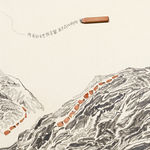
 Process photograph (detail): "We set off at dawn. Somehow, the excitement before the departure has already left me a little weary ------"
過程影像(局部):「我們在拂曉的時刻出發,不知怎地,出發前的興奮已讓我有點疲倦 ------ 」
 Process photograph (detail): "We decided to first finish walking the flats and valleys to the left of the river ------"
過程影像(局部):「我們決定先走完河流左邊的平地與山谷 ------」
 Process photograph (detail): "Arriving on the other shore ------"
過程影像(局部):「登上彼岸 ------」
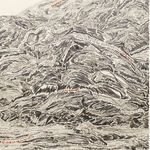
 Process photograph (detail): "We finally reached the foot of the main range -----" / "Deciding to walk through, hill by hill, layer by layer -----"
過程影像(局部):「我們終於抵達主山脈的山腳 -----」、
「決定一丘一丘,一層一層的走進去 ------」
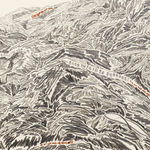
 Process photograph (detail): "Later I realized that everything that had ever happened—scenes remembered or forgotten—surfaced beneath my feet between every step ------"
過程影像(局部):「後來我發覺,曾經發生過的事,不論記得或不記得的場景,都在踏地與離地之際浮現足下 ------」
 Process photograph (detail): "This entire journey is like a dream—a dream of exhaustion, hardship, pain, confusion, and helplessness -----"
過程影像(局部):「這整個旅程像場夢,疲憊、艱辛、痛苦、困惑、無奈的夢 -----」
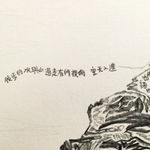
 Process photograph (detail): "I am grateful for your company..." / "You said walking as a duo or alone is neither better nor worse, just different. The mountain to be climbed is still the same -----"
過程影像(局部):「我慶幸有你同行 ------」、
「你說兩個人走或一個人走,不會更好或不好,只是不一樣。要爬的,還是同一座山 ------」
 Process photograph (detail): "Energy depleted, the sky darkens; we decide to camp here for the night -----" / "Food and water will only last until tomorrow -----"
過程影像(局部):「氣力用盡,天也暗了,決定在此紮營過夜 ------」、「食物與水只夠到明天 ------」
 Process photograph (detail): "Finally reached the summit. Beyond our heavy breathing, there is no dialogue ------" / "Within my heart, not even a single word remains ------"
過程影像(局部):「終於登頂,除了喘息我們沒有對話------」、「心中連一個話語也沒有了------」
 Process photograph (detail): "------ Entering the sky, looking down upon all the steps taken through mountains and rivers ------" / "------ The magnificence is beyond all proportion to the hardship."
過程影像(局部):「------ 進入天空,俯視所有走過山和水的步伐------」、
「------ 所有的辛苦與美麗是不成比例的」
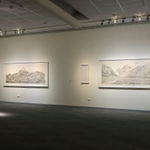
 Installation view, 2017 “LINES—Shi Jin-Hua’s Contemporary Religious Art," Kaohsiung Museum of Fine Arts, Kaohsiung, Taiwan
展場實錄:2017 高雄市立美術館「線 — 石晉華當代宗教藝術展」
Installation view, 2017 “LINES—Shi Jin-Hua’s Contemporary Religious Art," Kaohsiung Museum of Fine Arts, Kaohsiung, Taiwan
展場實錄:2017 高雄市立美術館「線 — 石晉華當代宗教藝術展」
Shi Jin-Hua
Document: 31 7/8 × 12 5/8 in. (81 × 32 cm)
Further images
-
(View a larger image of thumbnail 1
)
-
(View a larger image of thumbnail 2
)

-
(View a larger image of thumbnail 3
)

-
(View a larger image of thumbnail 4
)
-
(View a larger image of thumbnail 5
)
-
(View a larger image of thumbnail 6
)

-
(View a larger image of thumbnail 7
)
-
(View a larger image of thumbnail 8
)

-
(View a larger image of thumbnail 9
)

-
(View a larger image of thumbnail 10
)

-
(View a larger image of thumbnail 11
)
-
(View a larger image of thumbnail 12
)

-
(View a larger image of thumbnail 13
)

-
(View a larger image of thumbnail 14
)
-
(View a larger image of thumbnail 15
)

-
(View a larger image of thumbnail 16
)

-
(View a larger image of thumbnail 17
)

-
(View a larger image of thumbnail 18
)
-
(View a larger image of thumbnail 19
)

-
(View a larger image of thumbnail 20
)

-
(View a larger image of thumbnail 21
)
-
(View a larger image of thumbnail 22
)
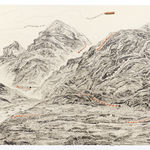
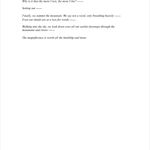
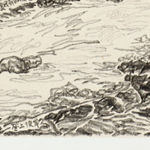
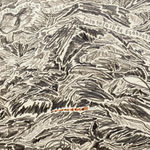
Pen Walking series: Pilgrimage to Mount Kailash is realized through tracing the contours of Mount Kailash with a single pencil repeatedly. Mount Kailash is regarded as a sacred mountain by multiple religious traditions. Devout Tibetan Buddhists believe that circumambulating the mountain in a clockwise direction purifies past and present karma and accumulates merit. For me, the mountain functions as a symbol, an ultimate goal of transcendence within the cycle of rebirth. As my body cannot physically reach this sacred site, I turn this sheet of paper into my field of pilgrimage.
In Buddhism, circumambulation is both an act of reverence and a form of cultivation, defined by focus, repetition, and sustained attention. That an entire pencil life is devoted to circling a single mountain is, in itself, profoundly beautiful. To exhaust a pencil through uninterrupted lines and accumulated graphite shavings is to dedicate one lifetime to this ascent. If the climb remains unfinished, it continues in the next life, and next pencil. If it cannot be completed in this life, then the next, and the next. As long as there is a fundamental vow, I believe that one day I will come face to face with truth, wisdom, and compassion.
(Text adapted from the 2013 monograph. Read full statement here)
「走筆—岡仁波齊峰轉山」以一支鉛筆反覆繞行、走畫出岡仁波齊峰的輪廓。岡仁波齊峰被多個宗教視為聖山,篤信佛教的藏人相信以順時鐘方向繞山,能夠滌盡罪業、累積功德。對我而言,這座山是一個象徵,代表在輪迴生命中試圖超越的目標。我的身體無法親臨其境,便以這一方紙作為朝聖的道場。
繞行在佛教中既是敬禮,也是修行,意味著專注、反覆,以及念茲在茲的行走。鉛筆的一生完全奉獻於繞行一座山,本身就很美。以不中斷的線條與鉛筆屑,耗盡一支鉛筆的「走筆轉山」,指的是以一期生命攀登此山;若未完成,便在下一個生命(另一支鉛筆)中繼續前行。若此生不成,來生再來,只要懷抱一個根本的願力,終有一天,我將面對真理、智慧與慈悲。
(文字編整自2013年作品集。閱讀全文)
展覽
2017 Art Basel Hong Kong, Mindset Art Center, Hong Kong2017 LINES—Shi Jin-Hua’s Contemporary Religious Art, Kaohsiung Museum of Fine Arts, Kaohsiung, Taiwan
2017 香港巴塞爾藝術展,安卓藝術展位,香港
2017「線 — 石晉華當代宗教藝術展」,高雄市立美術館,高雄,臺灣
出版品
2018 LINES—Shi Jin-Hua’s Contemporary Religious Art. Kaohsiung Museum of Fine Arts, Kaohsiung, Taiwan.2018《線 — 石晉華當代宗教藝術展》,高雄市立美術館,臺灣